

What a blow! A fall, an accidental knock or biting into something hard can instantly chip a front tooth, leaving a noticeable change to your smile.
Even though a small chip may seem minor, it can impact your life in a big way. It can change how you feel about your smile, leave a sharp edge against your tongue, cause sensitivity or discomfort when biting, and have you wondering how quickly your tooth can be restored.
The encouraging part is that a chipped tooth does not always mean extensive dental work. Many minor to moderate chips can be repaired in a single appointment with composite bonding. Your dentist rebuilds the missing portion with tooth-coloured resin, then carefully shapes and colour-matches it to the surrounding tooth.
Here is what same-day chipped tooth repair involves and when another treatment may be more appropriate.
What is composite bonding?
Composite bonding is one of the most conservative ways to repair a chipped front tooth.
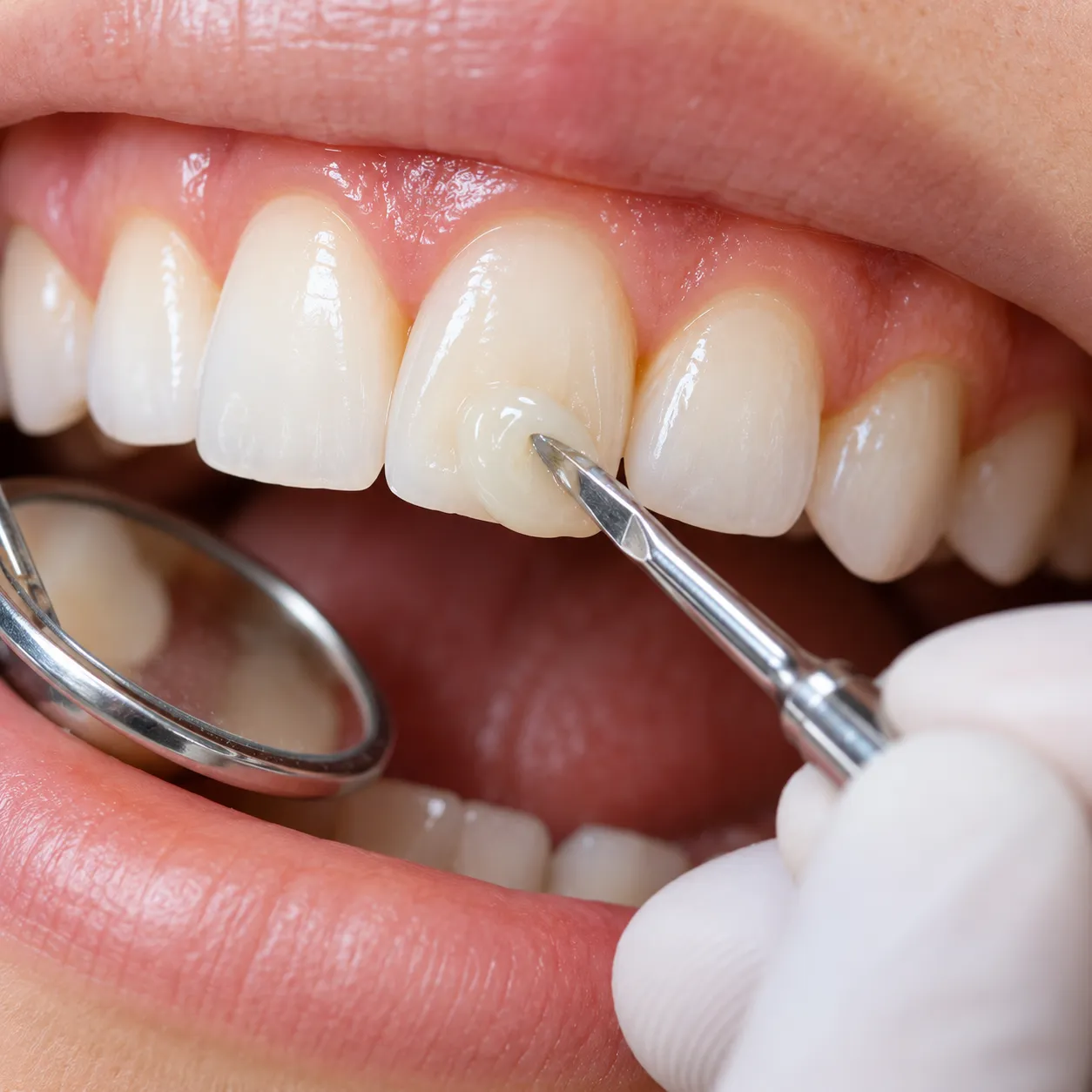
Your dentist applies a tooth-coloured composite resin directly to the damaged tooth, gradually building up the missing area. The material can be shaped to recreate the natural contours of your tooth before being hardened with a specialised curing light.
The final restoration is then trimmed, smoothed and polished.
Shaped and shaded to match
There’s no band-aid approach to repairing a front tooth. Colour, translucency, shape and surface texture all influence how naturally the restoration blends with your smile.
Your dentist can layer composite resin in different shades and carefully sculpt it to complement the tooth and its neighbours, helping the repaired area blend with the surrounding enamel.
Composite bonding also generally requires little preparation. When the tooth is otherwise healthy, there is usually no need to significantly remove natural tooth structure.
Why bonding works so well for same-day repairs
When a chip is suitable for composite bonding, the treatment packs a lot into a single appointment.
One appointment: Many straightforward repairs can be completed in around 30 to 60 minutes per tooth, depending on the size and complexity of the chip.
Minimal preparation: Bonding can preserve more of the natural tooth than treatments that require extensive reshaping.
Natural appearance: Composite can be carefully colour-matched and sculpted to recreate the appearance of natural enamel.
Comfortable treatment: Straightforward bonding is usually minimally invasive and may not require local anaesthetic. Anaesthesia may be recommended if deeper tooth structure is involved.
Accessible option: Composite bonding is generally less costly than laboratory-made restorations such as porcelain veneers or crowns, although fees vary between practices.
What happens during a same-day tooth repair?
From assessing the damage to the final polish, a same-day repair is generally straightforward.
1. Examination and preparation
Your dentist will first assess the extent of the damage. They will check whether the chip is limited to the enamel or whether deeper structures, cracks or decay are involved. X-rays may be recommended if there is concern about damage beneath the visible surface.
The tooth is then cleaned and prepared. A conditioning or etching process helps create a suitable surface for the bonding material.
2. Sculpting and curing
The composite resin is applied in layers and carefully shaped to restore the missing portion of the tooth.
Once the shape and colour are right, a curing light hardens the material within seconds.
3. Finishing and polishing
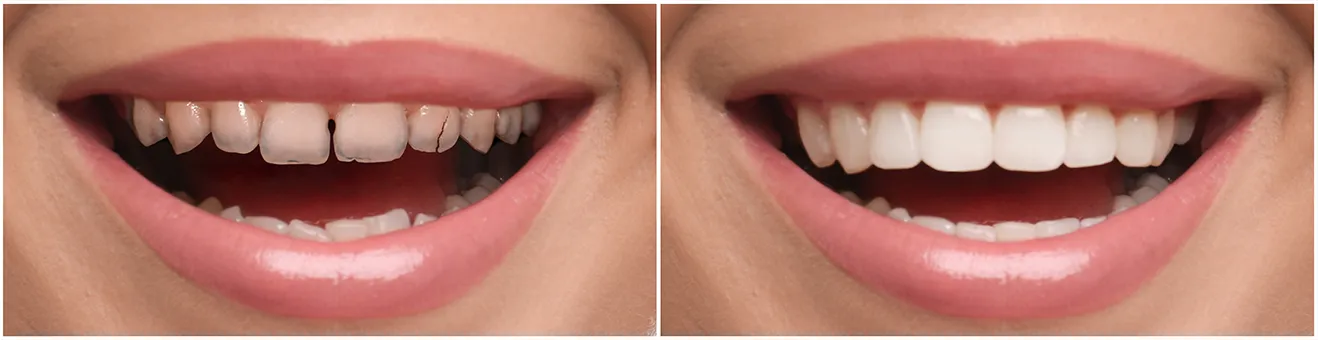
Your dentist refines the edges and checks your bite to make sure the restored tooth feels comfortable.
The final polishing gives the composite a smooth surface and natural-looking shine.
What if the chip is too large for bonding?
Composite bonding is highly effective for many small and moderate chips, although it is not suitable for every situation.
If a substantial amount of tooth structure has been lost or the remaining tooth is weakened, your dentist may recommend a stronger restoration.
Porcelain veneers may be considered when the front surface requires more extensive cosmetic restoration. They are custom-made and can provide excellent aesthetics and stain resistance.
Porcelain veneers may be considered when the front surface requires more extensive cosmetic restoration. They are custom-made and can provide excellent aesthetics and stain resistance.
Dental crowns may be appropriate when the tooth has suffered significant structural damage. A crown covers the tooth to provide greater protection and support.
More complex restorations may require digital impressions and laboratory fabrication, meaning treatment may take more than one appointment.
If a chip has caused significant pain, swelling or persistent sensitivity, the tooth should be assessed promptly. Deeper damage may require additional treatment before the tooth can be restored.

How to protect your repaired tooth
A bonded tooth can last for years with appropriate care, although composite resin can chip or wear if subjected to excessive force.
Protect your repair by:
- Avoiding ice, hard lollies and other very hard foods.
- Never using your teeth to open packaging or bite non-food objects.
- Wearing a professionally fitted nightguard if you grind or clench your teeth.
- Brushing twice daily with fluoride toothpaste.
- Cleaning between your teeth every day.
- Keeping up with regular dental examinations and professional cleans.
Composite can also stain over time, so good oral hygiene is important for maintaining its appearance.

Restore your tooth for a smile that lasts
Even a noticeable chip can sometimes be repaired more simply than you might expect. Composite bonding can restore the shape and appearance of many suitable front teeth in a single visit while preserving healthy natural structure.
The only way to know what your chipped tooth needs is to have it assessed. Your dentist can determine whether composite bonding is suitable or whether the damage extends further and requires additional protection.
Once repaired, looking after the result matters too. Good oral hygiene, sensible habits and regular dental care can help protect both the restoration and the natural tooth beneath it.
A chip may change your smile in an instant, but restoring it could also be surprisingly quick.

